Teachers Day in India: Honoring Teachers, Their Work, and Their Influence
Teachers Day in India is a time to recognize the people who make education meaningful. Celebrated every year on September 5, the day teachers receive special appreciation for their hard work, dedication, and contribution to students’ academic and personal development. It also reflects the Guru Shishya relationship, a traditional bond built on trust, guidance, respect, and shared learning.
Teachers Day celebrated in India marks the birth anniversary of Sarvepalli Radhakrishnan, a philosopher, educator, and India’s second President. His life demonstrates the importance of teachers in education and the lasting influence of thoughtful teaching. The observance reminds students to express gratitude for the teachers who share knowledge, develop skills, encourage questions, and help young people grow into responsible members of society.
The history of Teachers Day connects cultural values with the everyday role of teachers. From traditional mentorship to modern classrooms, teachers support learning through explanation, feedback, encouragement, and practical guidance. The day is not only about ceremonies; it is an opportunity to understand how teachers help students build confidence, knowledge, character, and resilience.
Key Takeaways
- Teachers Day is celebrated in India every year on September 5 to honor teachers and their contribution to education.
- The observance marks the birth anniversary of Sarvepalli Radhakrishnan and highlights the role teachers play in society.
- Students can express gratitude through respectful words, thoughtful messages, and actions that show they value learning.
- Teachers’ daily work extends beyond lessons to include guidance, encouragement, feedback, and support for student development.
The Meaning of Guru Shishya Parampara in Indian Education
Guru Shishya Parampara is an influential tradition in Indian education, not the complete foundation of the modern Indian education system. It describes a learning relationship in which a teacher shares knowledge while helping students develop judgment, skills, values, and respect for learning. Its history remains relevant because education involves more than memorizing information; it also requires curiosity, practice, responsibility, and guidance.
How the guru shishya relationship extends beyond classroom instruction
The guru shishya relationship extends beyond a lesson or examination. Teachers explain difficult ideas, ask questions, lead classroom discussions, and use feedback to help students improve. They also notice individual strengths and difficulties, adapting their teaching so that students can learn at an appropriate pace. These actions show the practical role teachers play in education and in students’ daily development.
Modern mentorship does not mean that students must accept every answer without question. Instead, teachers encourage independent thinking while providing structure and support. Through conversations, projects, revision, and guidance, educators help students connect knowledge with real-life situations. This approach reflects the importance of teachers in education and their wider contribution to society.
Values of trust, discipline, humility, and shared growth
Trust helps students participate, ask questions, and share ideas without fear of embarrassment. Discipline creates the routines needed for focused learning, while humility allows both teachers and students to recognize mistakes and remain open to new knowledge. These values make the classroom more respectful and productive.
Shared growth also describes the work of effective teachers. Educators learn from students’ questions and experiences, while students benefit from their teachers’ dedication and hard work. This two-way exchange strengthens learning and helps students build communication, problem-solving, and collaboration skills.
Balancing traditional guidance with modern learning methods
Modern education can combine the personal guidance associated with Guru Shishya Parampara with digital resources, research tools, and interactive lessons. Technology can expand access to information, while teachers help students evaluate sources, understand difficult ideas, and apply knowledge responsibly. Digital learning is most effective when it supports, rather than replaces, meaningful teaching and human connection.
Teachers Day gives students an opportunity to recognize this daily effort and express gratitude. Whether learning takes place in a classroom or through digital platforms, students can show respect through thoughtful messages, active participation, and a commitment to learning. The day celebrated in India also reminds communities that Teachers Day celebrated each year honors the continuing role of teachers in education and society.
Why Teachers Day Matters in India
In India, Teachers Day is an annual occasion for recognizing the work of educators and the difference they make in students’ lives. Teachers Day is celebrated every year on September 5, and the day celebrated in India provides an opportunity to reflect on teaching, learning, and the contribution of teachers to society. Rather than representing one identical national program, Teachers Day may be observed through different activities in schools and communities.
The importance of Teachers Day in honoring educators
The importance of teachers in education is visible in the work they do each day. Teachers plan lessons, explain knowledge clearly, assess learning, provide feedback, and adjust instruction when students need additional support. Their dedication helps students develop academic skills, confidence, independence, and values that extend beyond examinations.
Teachers Day also recognizes the hard work behind effective teaching. When students show respect and gratitude, they acknowledge the preparation, patience, and guidance that educators provide throughout the year. These gestures do not replace fair working conditions or professional support, but they can reassure teachers that their effort is noticed and valued.
How Teachers Day in India recognizes the contribution of teachers
The observance highlights the role of teachers in students’ lives without suggesting that every school follows the same tradition. Some schools hold assemblies or classroom discussions, while others organize student presentations, letters, exhibitions, or opportunities for teachers to reflect on their work. The day celebrated in India can therefore take many respectful and inclusive forms.
Teachers provide more than subject knowledge. They help students ask questions, solve problems, work with others, respond to mistakes, and make responsible decisions. By offering appropriate guidance and referring students to additional support when necessary, teachers contribute to academic progress and well-being while maintaining their professional role.
Ways students and schools can express meaningful gratitude
Students can express gratitude through specific, low-cost actions rather than expensive gifts. They might write a note describing a useful lesson, share a personal learning goal, create a display of class work, or thank a teacher privately. Students who do not want to perform in front of others can participate through artwork, written reflections, group planning, or quiet acts of respect.
These ideas make Teachers Day more meaningful because they connect appreciation with learning. Schools can also invite students to discuss how teachers have helped them build skills or overcome a challenge.
From classroom activities to community-centered appreciation
Classroom activities may include peer-teaching sessions, teacher interviews about lesson planning, or discussions about the values that support a respectful learning community. Schools may also invite retired teachers to share experiences, provided the activity is voluntary and accessible. Such efforts honor the contribution of teachers and help students understand why Teachers Day celebrated in India remains relevant.
Ultimately, gratitude should continue after the day ends. Active participation, respectful communication, and serious engagement with learning are among the most meaningful ways students can recognize their teachers’ work.
Dr. Sarvepalli Radhakrishnan and the Origin of Teachers Day
Dr. Sarvepalli Radhakrishnan was a philosopher, educator, and public servant who had a lasting influence on Indian education. Born on September 5, 1888, he became India’s first Vice President and later served as the country’s second President. His academic work and public life connected philosophical ideas with the responsibilities of education, citizenship, and ethical leadership.
Radhakrishnan’s role as a philosopher, educator, and statesman
Before entering national politics, Radhakrishnan worked as a professor and university administrator. He wrote and taught about Indian and Western philosophy, encouraging students to examine ideas carefully and develop independent judgment. His work did not treat knowledge as simple memorization; it presented education as a way to cultivate reason, character, and a deeper understanding of society.
As India’s first vice president and later second president, he brought these interests into public service. His career demonstrates why the role of teachers extends beyond delivering information. Teachers help students ask informed questions, evaluate evidence, understand different perspectives, and use learning responsibly. These principles remain relevant to teachers and students in every year of the Indian education system.
Why his birthday became a day dedicated to teachers
The widely reported history of Teachers Day connects the observance with Radhakrishnan’s birth anniversary. According to this account, when his students and admirers wanted to celebrate his birthday, he suggested that September 5 should instead be observed as a day honoring teachers. This request shifted attention from one person to the dedication of educators as a group.
Teachers Day celebrated in India therefore marks the birth anniversary of Radhakrishnan while recognizing the work of teachers across the country. The day celebrated on September 5 is not simply a birthday celebration or a formal ceremony. It is an opportunity for students to express gratitude and respect for the people who support learning, develop values, and contribute to society.
The enduring relevance of his educational philosophy
Radhakrishnan’s educational ideas continue to matter because they place curiosity, ethical thinking, and lifelong learning alongside academic achievement. His philosophy is often associated with the belief that teachers should awaken students’ minds rather than only provide facts. In practice, this means encouraging discussion, independent study, thoughtful disagreement, and the responsible use of knowledge.
His career included several important roles, each with a different connection to education and public life.
| RolePrimary FocusImpact on Society | ||
| Philosopher | Indian and comparative philosophy | Encouraged dialogue and critical understanding |
| Educator | Teaching and academic scholarship | Influenced students and public thinking |
| First Vice President and second President | Public service and national leadership | Supported democratic institutions and civic values |
Ultimately, Teachers Day honors the principle that education shapes both individual lives and society. By remembering Radhakrishnan’s birth anniversary, students and teachers can reflect on the values of curiosity, humility, service, and intellectual responsibility. The observance keeps his connection with education in view while recognizing the everyday contribution of teachers.
Making Teachers Day Meaningful Through Reflection and Gratitude
Teachers Day, observed on the birth anniversary of Dr. Sarvepalli Radhakrishnan, is more than a date for ceremonies. In India, the day marks birth and contribution to education while giving students an opportunity to recognize the daily work of teachers. Meaningful observance focuses on how educators teach, provide guidance, share knowledge, and help students develop confidence and practical skills.
Connecting student achievement with the work of teachers
Academic progress is supported by many forms of teaching. Teachers plan lessons, explain difficult ideas, review student work, answer questions, and provide feedback that helps learners improve. When students reach a goal, they can acknowledge the teacher whose patience and dedication supported that progress.
This recognition builds genuine gratitude without reducing education to praise or ceremony. It highlights the role of teachers in education and their contribution to students, classrooms, and society. A specific note about a useful lesson or a teacher’s guidance is often more meaningful than a costly gift.
Lessons students can apply throughout the year
Students can use Teachers Day to reflect on the values their teachers model, including curiosity, responsibility, fairness, and respect. They can write thank-you notes, interview teachers about lesson planning, create displays of student work, or organize peer-tutoring sessions that reinforce learning. These ideas connect appreciation with education and show that students understand the effort behind effective teaching.
Teachers Day celebrated in India can also encourage students to ask how teachers help them develop knowledge, communication skills, and independent judgment. This reflection keeps the focus on learning rather than on a single event.
Honoring teachers beyond ceremonies
Flowers, cards, and classroom programs may be welcome, but appreciation should not require expensive gifts or promotional school activities. Students can participate through written reflections, artwork, respectful conversations, or quiet acts of cooperation. Schools can make activities accessible to students who do not wish to perform publicly.
Creating year-round respect for learning
Schools may continue the spirit of Teachers Day by inviting students to share learning stories, display work, or discuss effective teaching methods. Such practices honor teachers’ dedication and help students carry their guidance into future years.
When students participate actively and treat teachers with respect, they give a practical expression of gratitude. This is one of the clearest ways to make the anniversary meaningful beyond the day itself.
Dr. APJ Abdul Kalam’s Teachings on Learning and Leadership
Dr. APJ Abdul Kalam offers a useful supporting example for understanding the role of teachers in students’ lives. His public work and writing often connected education with curiosity, scientific thinking, responsibility, and national development. During Teachers Day, his ideas can help students and teachers consider how classroom teaching turns knowledge into practical skills and meaningful action.
His belief in teachers as builders of a stronger India
Kalam consistently emphasized the importance of educators in preparing young people for the future. Rather than treating teachers as lecturers who only deliver information, his ideas present them as people who encourage questions, support effort, and help students connect education with real problems in society. This view recognizes the dedication and hard work involved in teaching.
Encouraging curiosity, imagination, and scientific thinking
In practice, Kalam’s approach can be reflected through inquiry-based learning. Teachers may ask students to explain why a result occurred, design an experiment, compare evidence, or use a project to solve a local problem. These activities help students develop critical-thinking skills while showing that learning is an active process. Teachers can also give constructive feedback so students improve their work after mistakes.
“Teaching is a very noble profession that shapes the character, caliber, and future of an individual. If the people remember me as a good teacher, that will be the biggest honor for me.”
How Kalam’s teachings inspire students to pursue meaningful goals
During Teachers Day celebrations, students can reflect on how a teacher’s guidance helps them set realistic goals and take responsibility for their progress. A teacher may help a student break a large ambition into smaller tasks, plan a project, review results, and revise the next step. This process develops student leadership through practice rather than slogans.
Turning dreams into action through discipline and perseverance
Teachers support perseverance by setting clear expectations, recognizing progress, and helping students respond constructively to failure. These methods show that meaningful achievement depends on consistent work, reflection, and respect for the learning process. They also demonstrate how teaching contributes to confidence and responsible participation in society.
| Core ValueTeacher’s RoleStudent Outcome | ||
| Curiosity | Asking open questions and encouraging investigation | Critical thinking |
| Discipline | Setting clear goals and reviewing progress | Consistent learning |
| Imagination | Using projects and experiments to explore ideas | Creative problem-solving |
| Perseverance | Giving feedback and supporting revision | Resilience |
The Teacher’s Role in Students’ Lives Today
The modern classroom is a structured environment where teachers support students’ academic progress, confidence, and preparation for life beyond school. The role of teachers in students’ lives includes direct instruction, planning, assessment, feedback, mentoring, and the creation of respectful routines that help learning take place.
Supporting academic progress and emotional well-being
Teachers connect complex concepts with student understanding by using differentiated instruction, formative assessment, guided practice, and clear explanations. They monitor progress through classwork, questions, projects, and assessments, then adjust teaching when students need additional support or greater challenge.
Teachers can also contribute to emotional well-being by creating predictable routines and a classroom where students can ask for help without shame. They may notice changes in participation or behavior and share appropriate concerns with families or qualified counselors, but they do not diagnose or treat mental-health conditions. Their guidance is one part of a wider support system.
Helping students develop confidence, independence, and resilience
An effective teacher does not simply provide answers; a teacher shows students how to investigate questions, evaluate evidence, and explain their reasoning. Collaborative learning, project-based learning, classroom discussion, and supervised independent work help students develop problem-solving and communication skills while maintaining clear academic expectations.
When students make mistakes, teachers can use feedback and revision to turn errors into opportunities for learning. Office hours, individual conferences, and supportive classroom routines give students time to review difficult ideas and set practical goals. This approach builds independence and resilience without removing the structure students need.
Why the importance of teachers in education goes beyond test scores
The importance of teachers in education cannot be measured by test scores alone. Teachers also help students develop motivation, ethical judgment, cooperation, and the ability to use knowledge responsibly. These outcomes influence how students participate in their communities and approach challenges throughout life.
Through inclusive education, teachers recognize different backgrounds, abilities, interests, and ways of learning. They can provide varied materials, flexible explanations, accessible activities, and multiple ways for students to demonstrate understanding. This work reflects the values of respect and fairness and strengthens the contribution teachers make to society.
Building inclusive classrooms where every learner feels valued
Every student should have a reasonable opportunity to participate and be heard. Teachers build this environment through respectful language, clear expectations, cooperative activities, and consistent responses to unfair behavior. They encourage students to listen to different ideas while teaching them to disagree thoughtfully.
By combining structure with choice, educators help learners feel secure enough to ask questions and take intellectual risks. This daily teaching work is one reason teachers day and other school celebrations can honor more than classroom results: they can recognize the dedication behind inclusive learning.
From Guru Shishya Tradition to Holistic Education
Modern classrooms can apply the useful principles of the guru shishya relationship—trust, guidance, practice, and shared responsibility—without copying historical educational settings. The goal of holistic education is to develop knowledge, character, creativity, and well-being alongside academic achievement.
Combining knowledge, character development, creativity, and well-being
Teachers combine lessons with discussion, creative tasks, practical projects, and reflection. Students who feel supported are more likely to explore ideas, respond to feedback, and take responsibility for their learning. This balance connects teaching with the values needed for cooperation and responsible participation in society.
Learning remains strongest when students understand both what they are studying and why it matters. Teachers help make these connections by relating knowledge to real situations, student interests, and future skills.
How mentoring strengthens the modern Indian education system
Mentoring gives students regular guidance while preserving their independence. A teacher may help a student identify a challenge, plan a response, review progress, and decide what to try next. This relationship supports learning without treating the teacher as the sole authority.
Effective mentorship also depends on communication among teachers, students, and families. Clear updates and shared expectations can help students receive consistent support while keeping their needs at the center of education.
Using technology while preserving human connection in learning
In modern education, digital tools can provide research materials, simulations, accessibility features, and opportunities for collaboration. Teachers remain essential because they help students assess sources, protect privacy, understand difficult content, and use technology responsibly.
Technology should support teaching rather than replace it. A teacher’s explanations, questions, feedback, and judgment give digital activities purpose and help students connect screen-based tasks with meaningful learning.
Encouraging collaboration among teachers, students, and families
A successful educational journey depends on respectful communication among teachers, students, and families. When these groups share relevant information and realistic goals, they create a stronger support system for the learner. This partnership gives Teachers Day a practical meaning: recognizing the work teachers do every day to help students learn and grow.
| FeatureTraditional ApproachModern Holistic Approach | ||
| Primary Focus | Guided knowledge and practice | Integrated academic and life-skill development |
| Teacher Role | Instructor and mentor | Teacher, facilitator, and feedback provider |
| Learning Tool | Dialogue, demonstration, and practice | Digital, collaborative, and experiential learning |
| Outcome | Understanding and discipline | Independent thinking, character, and applied skills |
How Geneva Liberal School Ahmedabad Reflects These Educational Values
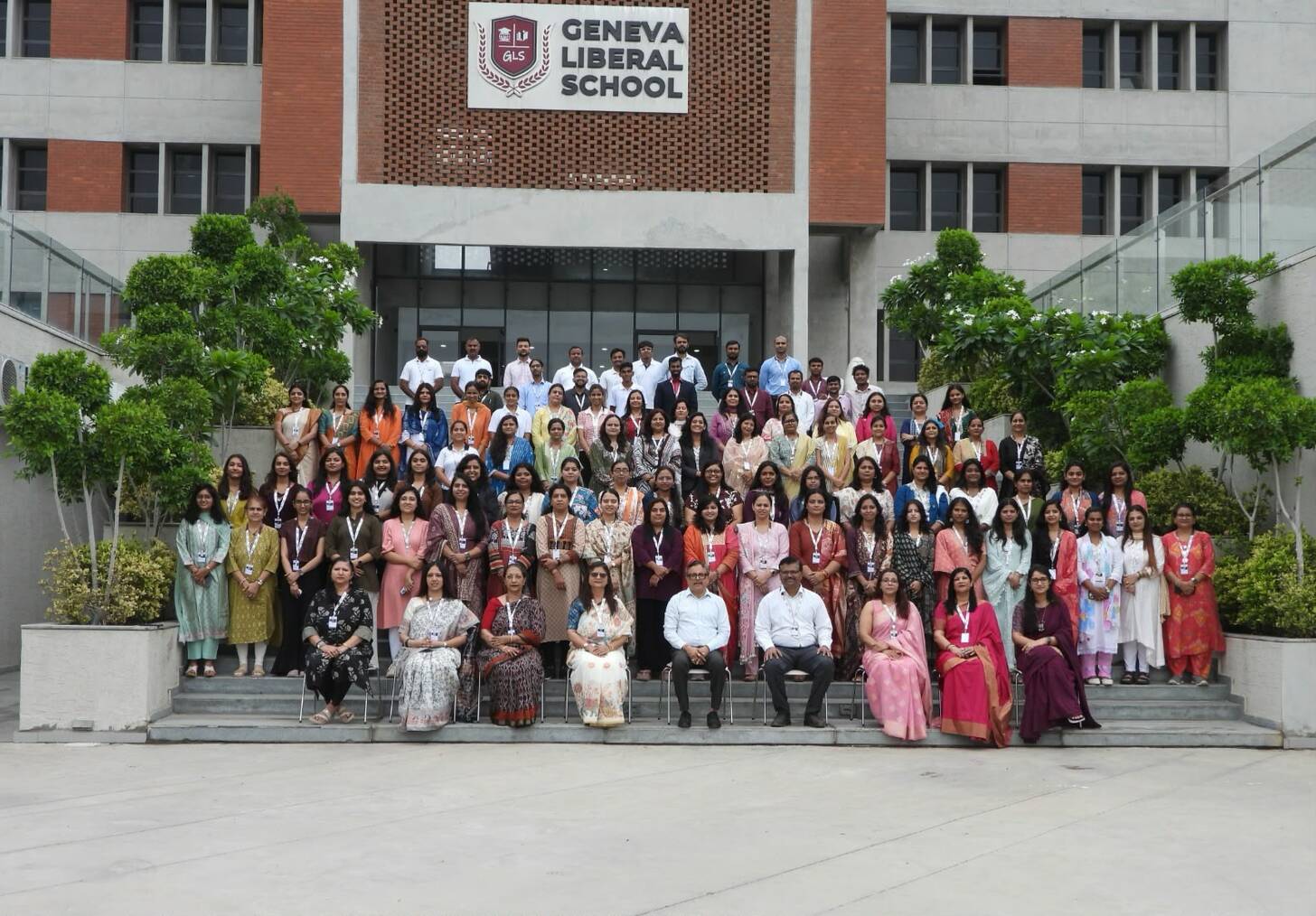
Teachers Day provides an opportunity to examine how teaching works in a real school setting. At Geneva Liberal School Ahmedabad, descriptions of classroom practice should be based on documented school policies, teacher guidance, and observable learning activities rather than promotional claims. The focus is on how teachers support students through instruction, feedback, and respectful relationships.
Connecting the guru shishya ideal with a contemporary school environment
The guru shishya ideal can be understood today as a relationship built on trust, attention, and shared responsibility. At the school, teachers can reflect this approach by explaining expectations clearly, listening to students’ questions, and providing guidance as learners work toward academic and personal goals.
This role does not make the teacher the sole authority. Instead, teaching can combine direct instruction with discussion, practice, feedback, and opportunities for students to make independent decisions. These methods help turn learning into an active process based on knowledge, respect, and responsibility.
Supporting inquiry, critical thinking, and respectful relationships
Inquiry-based teaching encourages students to ask questions, compare evidence, and explain their ideas. Teachers may support this work through projects, classroom discussions, differentiated tasks, and feedback that helps students improve their skills. Any description of these practices should be confirmed through official school materials or classroom examples.
Respectful relationships are also part of effective education. Teachers can establish clear routines, invite different perspectives, and ensure that students have appropriate ways to participate. These practices connect academic learning with values that students may use in school and later in life.
Understanding the school’s approach through verified classroom practice
A useful Teachers Day reflection should focus on what teachers actually do: how they plan lessons, explain knowledge, assess understanding, provide guidance, and help students respond to mistakes. If verified, these examples can show how the school applies holistic education without claiming that its approach is superior to another school or curriculum.
Teachers Day celebrations can recognize these daily efforts by highlighting student learning, thoughtful teaching, and the contribution of educators. The school’s role in this discussion is as a specific example of teaching practice, not as an advertisement or enrollment recommendation.
Making Teachers Day Meaningful for Students and Schools
Teachers Day offers an opportunity to connect appreciation with real learning. Rather than focusing only on ceremonies, schools can create simple activities that recognize teachers’ preparation, guidance, knowledge, and contribution to students. The day can also encourage respect for the wider school community, including support staff whose work helps education take place.
Student-led activities that celebrate teachers’ influence
Students can take the lead in practical, low-cost activities that show how a teacher has influenced their learning. They might interview a teacher about lesson planning, organize a short peer-teaching session, or present one idea or skill they developed in class. These activities make Teachers Day collaborative rather than passive.
- Write evidence-based appreciation notes describing a specific lesson or form of guidance.
- Organize peer-teaching sessions that reinforce knowledge and communication skills.
- Create displays of student work that show progress, effort, and learning.
Classroom conversations about mentors from history and literature
Teachers can lead discussions about mentors in history, literature, and education while making clear which points are interpretation rather than established fact. Students may compare different ideas about responsibility, curiosity, discipline, and respect. These conversations help explain why Teachers Day celebrated in India is connected with the wider role of teachers in students’ lives.
“A meaningful tribute to a teacher is to use learning with curiosity, responsibility, and respect.”
Projects inspired by Radhakrishnan, APJ Abdul Kalam, the Ramayana, and the Mahabharata
Projects can connect Teachers Day with education without presenting literary or religious stories as historical evidence. Students might research Dr. Radhakrishnan’s educational ideas, examine APJ Abdul Kalam’s emphasis on curiosity, or compare how teachers and mentors are represented in the Ramayana and Mahabharata. The following table offers practical applications for student development:
| Mentor FigureCore LessonPractical Application | ||
| Dr. Radhakrishnan | Curiosity and responsible education | Reflection on a meaningful lesson |
| Dr. APJ Abdul Kalam | Inquiry and perseverance | Science or problem-solving project |
| Guru Vashistha | Mentorship in literary tradition | Discussion of guidance and values |
Turning appreciation into year-round respect and responsible action
The value of Teachers Day should continue after the day’s celebrations. Students can demonstrate gratitude by participating responsibly, completing work honestly, listening respectfully, and applying feedback. Appreciation should be voluntary and should not depend on expensive gifts or mandatory emotional displays.
When Teachers Day is celebrated through meaningful learning, students recognize teachers while strengthening their own skills and values. This year-round respect honors the role of teachers and the daily contribution they make to education.
Conclusion: Why Teachers Day Still Matters
Teachers Day brings together the enduring idea of mentorship and the practical work of modern education. The examples of Sarvepalli Radhakrishnan and APJ Abdul Kalam, along with lessons drawn from literature and cultural tradition, remind us that learning involves knowledge, character, curiosity, and responsibility. These ideas remain valuable when they are connected to accurate history and thoughtful classroom practice.
Celebrating Teachers Day every year recognizes the preparation, instruction, feedback, and guidance that teachers provide. The day celebrated in India also honors the birth anniversary associated with Radhakrishnan while giving students an opportunity to express gratitude and respect. The importance of teachers in education is reflected in their long-term contribution to students’ learning and development.
The role of teachers in students’ lives extends beyond academic results. Teachers help students ask questions, respond to mistakes, work with others, and apply values in daily life. Their dedication supports individuals, classrooms, and society, making teaching an important part of education.
Teachers Day is therefore not only a day of recognition. It is a reminder that students can honor their teachers through responsible learning, respectful communication, and continued effort. That lasting commitment is a practical expression of gratitude for the educators who guide students throughout their educational journey.